Understanding Gold Types and Gold Purity: A Complete Guide to Different Karats
Gold has been valued for thousands of years because of its beauty, rarity, and lasting value. Whether you are buying jewelry, investing in precious metals, or planning to sell old gold, understanding the different types of gold and gold purity levels is essential. This guide explains everything you need to know about gold karats, colors, and how purity affects value.
What Is Gold Purity?
Pure gold is measured in karats (K). The higher the karat number, the greater the percentage of pure gold in the item. Since pure gold is naturally soft, it is often mixed with other metals to improve durability and strength.
Here are the most common gold purity levels:
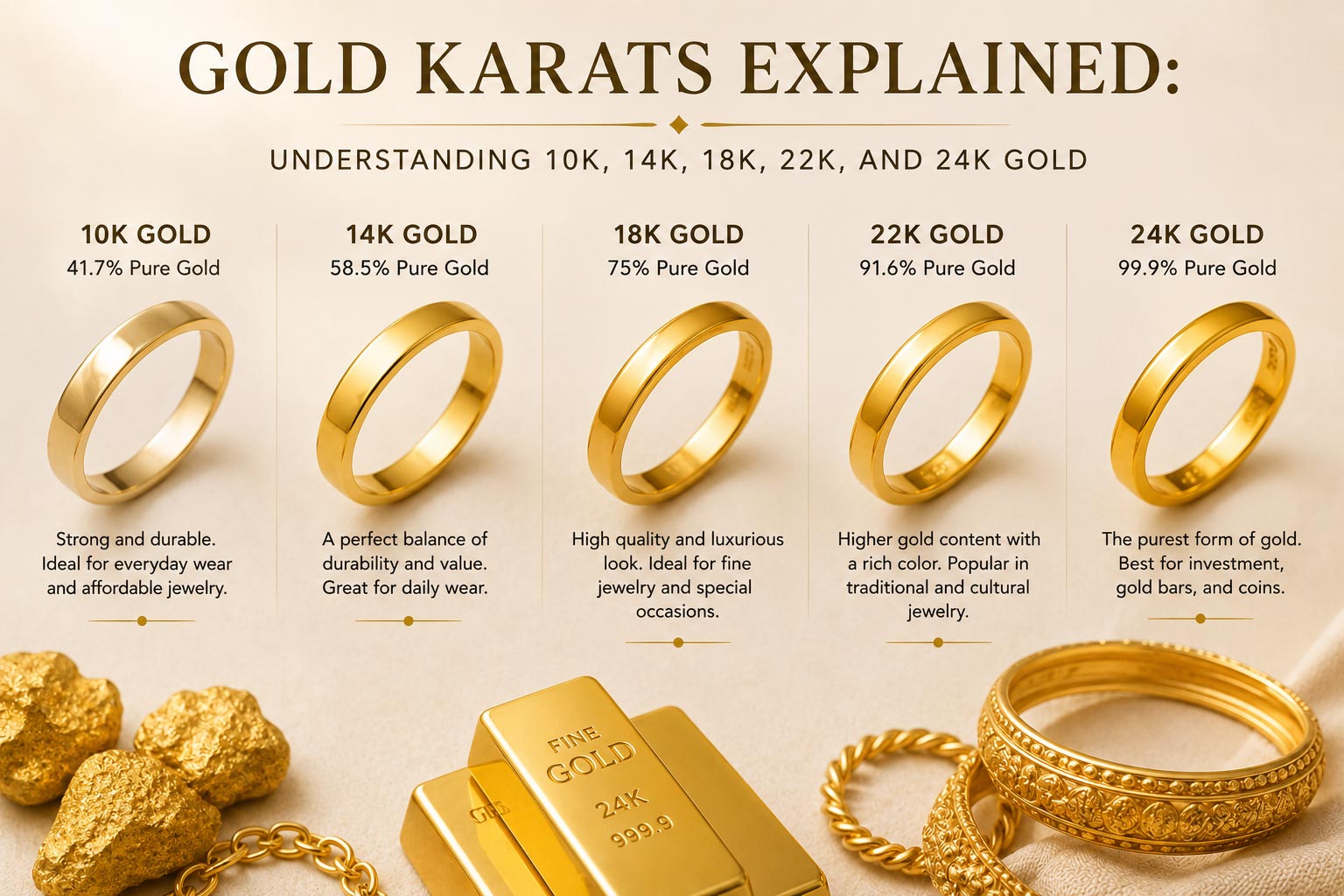
- 24K Gold – 99.9% pure gold
- 22K Gold – 91.6% pure gold
- 18K Gold – 75% pure gold
- 14K Gold – 58.5% pure gold
- 10K Gold – 41.7% pure gold
Each type has unique advantages depending on your needs and budget.
24K Gold: The Purest Form
24K gold is the purest form available on the market. It has a rich, bright yellow color and contains almost no other metals.
Advantages
- Highest gold content
- Excellent investment value
- Resistant to tarnishing
Disadvantages
- Softer than other karats
- Can scratch or bend more easily
- Less suitable for everyday jewelry
Because of its purity, 24K gold is commonly used for gold bars, coins, and investment products.
22K Gold: Traditional and Elegant
22K gold contains 91.6% pure gold with small amounts of silver, copper, or zinc added for strength.
It is widely used for traditional jewelry in many countries because it combines high purity with better durability than 24K gold.
18K Gold: Luxury Meets Durability
18K gold is one of the most popular choices for premium jewelry. With 75% pure gold, it offers an excellent balance between beauty and strength.
Benefits of 18K gold include:
- Rich golden appearance
- Greater resistance to scratches
- Perfect for engagement rings and fine jewelry
- High resale value
Many luxury jewelry brands prefer 18K gold because it provides both elegance and long-lasting performance.
14K Gold: The Everyday Choice
14K gold contains 58.5% pure gold and is extremely popular for daily wear.
Its advantages include:
- Excellent durability
- Affordable price
- Suitable for active lifestyles
- Available in many styles and colors
Although it contains less pure gold than 18K or 22K, 14K jewelry remains beautiful while requiring less maintenance.
Different Gold Colors
Gold is not only available in yellow. By mixing pure gold with different metals, manufacturers create several attractive colors.
Yellow Gold
The classic and most recognizable form of gold. It closely resembles natural gold and remains a timeless choice.
White Gold
White gold is created by combining gold with metals such as nickel or palladium. It is often coated with rhodium to produce a bright, modern finish.
Rose Gold
Rose gold contains a higher percentage of copper, giving it a warm pink appearance. It has become increasingly popular for modern jewelry designs.
Which Gold Karat Is Best?
The ideal choice depends on your goals.
- Choose 24K gold if you want maximum purity and investment value.
- Select 22K gold for traditional high-purity jewelry.
- Pick 18K gold for luxury jewelry that balances beauty and durability.
- Choose 14K gold if you need affordable, durable jewelry for everyday use.
How Gold Purity Affects Selling Price
When selling gold, buyers evaluate the purity, weight, and current market price. Higher-karat gold generally contains more pure gold, making it more valuable. However, the final offer also depends on the item’s condition and the daily gold price.
Working with a trusted gold buyer ensures transparent testing, accurate weighing, and a fair valuation.
Conclusion
Understanding the different gold types, gold purity levels, and gold karats helps you make informed decisions whether you are buying, investing, or selling gold. From pure 24K gold to durable 14K gold, each option serves a different purpose. Knowing the differences allows you to choose the right gold for your needs while maximizing both value and long-term satisfaction.